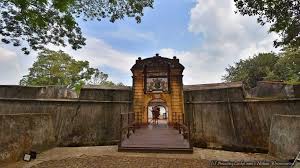
The Star Fort
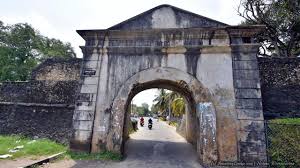
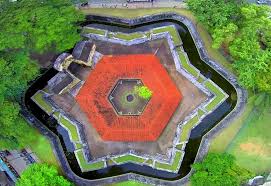
Unique in its architectural design, the Star Fort was built by the Dutch in 1765 to protect the entrance to the Nilwala River. Its distinctive six-pointed star shape makes it one of the most aesthetically striking colonial fortifications in South Asia. Today, it houses a charming museum that displays artifacts from the Dutch period, including old weaponry and maps. Entrance to the Star Fort is free, providing a peaceful environment for history enthusiasts to wander through the ramparts and admire the well-preserved drawbridge and moat.
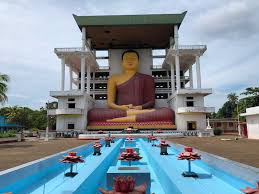
Weherahena Poorwarama Temple
Known as the first and largest tunnel temple in the world, Weherahena is a marvel of modern Buddhist artistry. The site is dominated by a colossal 39-meter (approx. 130 feet) seated Buddha statue that gazes serenely over the landscape. Below the statue lies a sprawling underground tunnel decorated with over 2,000 colorful murals depicting the various lives of the Buddha. The entrance fee for foreign visitors is approximately LKR 250 to LKR 500 (approx. $1 – $2), and it is customary to leave a small donation if you are guided by one of the resident monks through the labyrinthine passages.
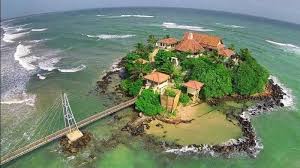
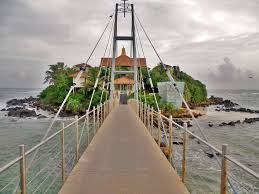
Parewi Duwa (Pigeon Island) Temple
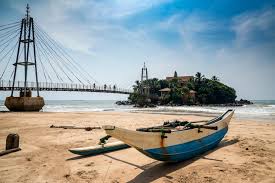
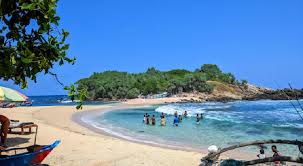
Perched on a small rocky island just off the Matara coast, this Buddhist temple is connected to the mainland by a picturesque suspension bridge. The temple itself is a modern construction surrounded by the crashing waves of the Indian Ocean, offering a serene space for meditation with breathtaking coastal views. There is no formal entrance fee, though visitors are expected to dress modestly (covering shoulders and knees) and remove their shoes before crossing the bridge into the sacred area.
Dondra Head Lighthouse
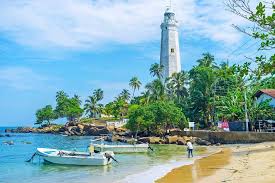
Located just a few kilometers east of Matara city, Dondra Head is the southernmost point of Sri Lanka. Standing at 49 meters, it is the tallest lighthouse in the country and one of the most iconic maritime landmarks in Southeast Asia. While the grounds and the base of the lighthouse are free to explore, travelers can sometimes gain permission to climb the 196 steps to the top for a panoramic view of the horizon. If access to the tower is permitted by the lighthouse keeper, a fee or tip of roughly LKR 500 – LKR 1,000 (approx. $2 – $3) is typically expected.
Peak Season (December – April):
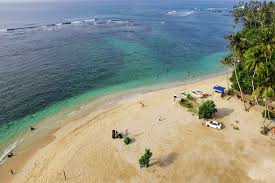
This is the prime window for Matara. The weather is dry and sunny, and the sea is at its calmest, making it the best time for beach visits and exploring the nearby Nilwala River.
Shoulder Season (July – August):
A brief dry spell during the mid-year provides a great opportunity for travel with fewer crowds, though the ocean may be slightly rougher than in the early months of the year.
Note:
Matara experiences its heaviest rainfall during the monsoon months of May to June and October to November. While the city remains lush and green, outdoor sightseeing can be frequently interrupted by tropical downpours.
Dreamway Luxury Travels (Pvt) Ltd
We specialize in crafting unforgettable travel experiences
Feel free to contact and reach us !!
Copyright © 2026 Lunar Creations. All rights reserved.
WhatsApp use