Jaya Sri Maha Bodhi
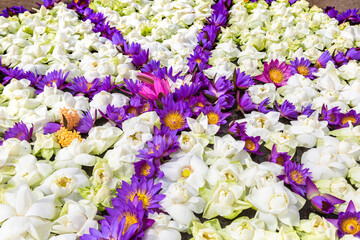
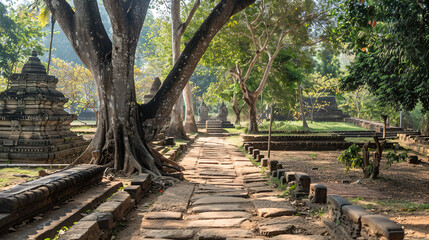
This is the spiritual heart of the city and one of the most sacred living relics in the world. Planted in 288 BC, it is the oldest historically documented tree on Earth, grown from a sapling of the original Bodhi tree under which the Buddha attained enlightenment. The tree is surrounded by gold-plated railings and meticulously tended by hereditary guardians. Entrance for foreign visitors is approximately LKR 1,000 (approx. $3). To experience its true aura, visit at sunrise or sunset when the sound of rhythmic chanting and the glow of oil lamps create a deeply moving atmosphere of devotion.
Ruwanwelisaya (The Maha Stupa)
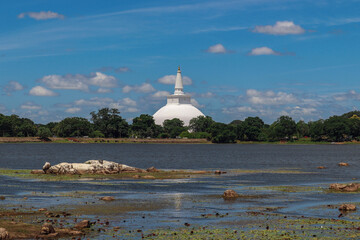
An architectural marvel of the ancient world, this massive white stupa was built by King Dutugemunu in 140 BC to enshrine a significant portion of the Buddha’s relics. The stupa is famous for its “Elephant Wall,” featuring hundreds of carved elephants that appear to support the base of the monument. While access to the stupa is included in the Sacred City Entrance Ticket ($25 / approx. LKR 8,000), it can also be visited individually with a modest donation. It is a striking sight at night when the entire dome is illuminated against the dark sky, reflecting the deep faith of the pilgrims who gather here in white attire.
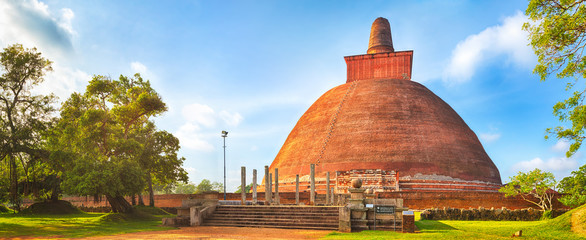
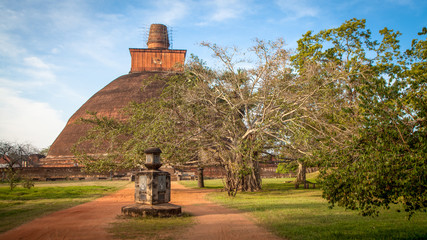
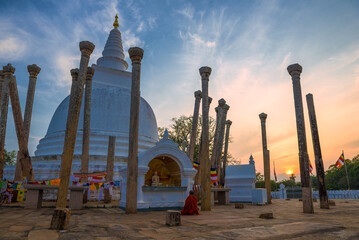
Jetavanaramaya Stupa
At the time of its completion in the 3rd century AD, Jetavanaramaya was the tallest brick structure in the world and the third tallest building overall, surpassed only by the Great Pyramids. Built using over 93 million baked bricks, it remains a testament to the engineering genius of the Anuradhapura kingdom. Access to this site and its onsite museum is included in the $25 Sacred City Entrance Ticket. The sheer scale of the ochre-hued monument is humbling, and walking around its massive circumference allows guests to appreciate the intricate brickwork that has survived nearly two millennia.
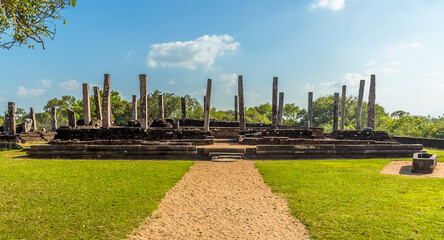
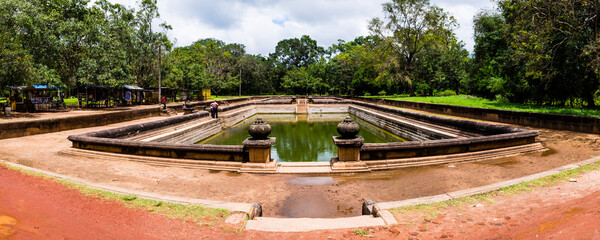
Abhayagiriya Monastery & Twin Ponds (Kuttam Pokuna)
Abhayagiriya was once a sprawling monastic university that housed over 5,000 monks and served as a global center for Buddhist philosophy. Within its grounds lie the Kuttam Pokuna (Twin Ponds), which are considered one of the best specimens of ancient hydrological engineering and landscape architecture. The ponds feature a sophisticated filtration system where water was purified through multiple chambers before entering the main pools. Exploration of this entire complex is included in the $25 Sacred City Entrance Ticket. It is the most atmospheric part of the city, where ruins are often partially reclaimed by the jungle, offering a sense of quiet discovery.
Isurumuniya Rock Temple
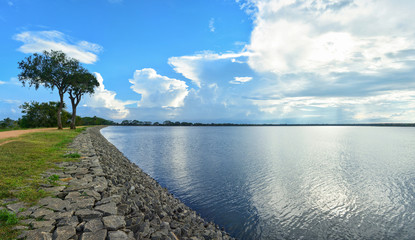
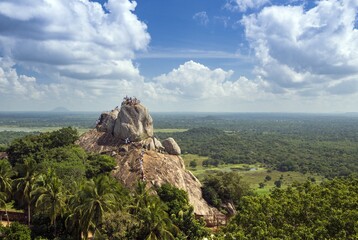
Carved into a massive rock boulder overlooking a scenic reservoir, this 3rd-century BC temple is world-renowned for its exquisite stone carvings, most notably the “Isurumuniya Lovers” and the “Elephants at Play.” The temple blends naturally with the landscape and features a serene lily pond at its base. The entrance fee for foreign visitors is LKR 500 (approx. $1.50). Because this is a separate site from the main archaeological complex, many luxury travelers visit it in the late afternoon to enjoy the cooling breeze from the Tissa Wewa reservoir and the romantic golden light that hits the rock carvings.
Peak Season (January – April):
This is the most pleasant time to visit the North Central Province. The weather is dry and the temperatures are relatively mild, making it ideal for exploring the vast outdoor ruins on foot or by bicycle.
Secondary Window (July – September):
While the days can be quite hot, the skies are generally clear. This coincides with the “gathering” of elephants in nearby Minneriya, making it a great time for a combined heritage and wildlife itinerary.
The “Poson” Festival (June):
If your clients wish to witness the cradle of Buddhism in its most vibrant state, June is the month of the Poson Poya festival. While crowded, the city is filled with festive lights and traditional rituals.
Note: October to December marks the main monsoon season. While the reservoirs look magnificent when full, the heavy rains can make exploring the unpaved paths of the archaeological site quite muddy and difficult.
Dreamway Luxury Travels (Pvt) Ltd
We specialize in crafting unforgettable travel experiences
Feel free to contact and reach us !!
Copyright © 2026 Lunar Creations. All rights reserved.
WhatsApp use